
What It Takes to Make Good Decisions: Judgment, Not Calculation
The real work in deciding is not in the calculation, but all the thinking that surrounds it.
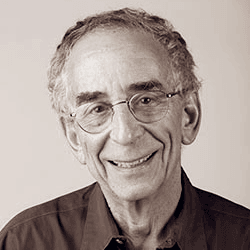
Barry Schwartz is emeritus professor of psychology at Swarthmore College. He was also a visiting professor at Haas School of Business, U.C. Berkeley. He is the author of The Paradox of Choice, Why We Work, Practical Wisdom (with Kenneth Sharpe), and, most recently, Choose Wisely (with Richard Schuldenfrei).
The real work in deciding is not in the calculation, but all the thinking that surrounds it.

A half century of research on how people make decisions has shown that rational choice theory fails to describe how people do choose. Nevertheless, it has remained at the center of things, as the normative answer to questions about how people should choose.

The theory that underpins much of decision-making science falls short as a way to think about how we actually make decisions and how decisions should be made.

Few of us relish uncertainty, but we can tolerate it if we at least know the odds.
Social science gives us ideas about human nature. What does it mean for the science when those ideas don’t just describe our nature, but shape it?

We should have greater confidence than before that findings we read about in journals will replicate. What’s good about this is evident. But do we pay a price for increased rigor?
A new study featuring more than 7,000 participants from six countries found that choice deprivation—a feeling of not having enough to choose from—not choice overload is the most common consumer experience.
As the world begins to open back up in fits and starts, we are, more than ever, longing for certainty. But certainty is likely a long way off. In the meantime, we should turn to practical wisdom to guide us.

We are reluctant to tell people how to live their lives, except insofar as individual decisions affect the lives of others. We can learn a valuable lesson for the present moment from the examples of smoking and drunk driving.

It is the fate of thousands of teenagers applying to dozens of selective institutions that they will not get what they deserve.