
Barry Schwartz: The Idea that Shaped My Career
The “finding” from outside psychology that most influenced me—indeed it essentially shaped my entire career—was not so much a “finding” as an argument.

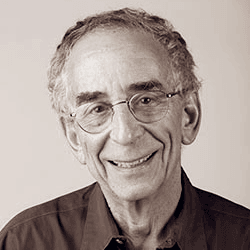
Barry Schwartz is emeritus professor of psychology at Swarthmore College. He was also a visiting professor at Haas School of Business, U.C. Berkeley. He is the author of The Paradox of Choice, Why We Work, Practical Wisdom (with Kenneth Sharpe), and, most recently, Choose Wisely (with Richard Schuldenfrei).
The “finding” from outside psychology that most influenced me—indeed it essentially shaped my entire career—was not so much a “finding” as an argument.

There is another way—a way that leads to happier workers, more fulfilling work, and more successful companies.

The field mistakenly called “behavioral economics” (mistakenly because what it is is psychology applied to domains that are the normal province of economists) has taken the intellectual and political world by storm.
Many years ago, the very distinguished experimental psychologist, George Miller, in a presidential address to the American Psychological Association, admonished the academics in his audience to “give psychology away.”

When I wrote an article for The Atlantic about a year ago arguing for the importance of a Council of Psychological Advisors, I was motivated by frustration that policy makers fail to take advantage of the best that psychology has to offer when it comes to formulating and implementing public policy.