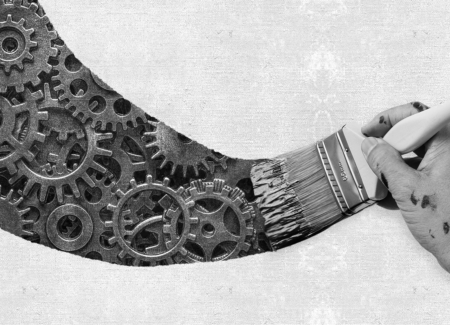
The Surprising Origins of Our Obsession with Creativity
We tend to assume creativity is a timeless human value. But creativity as the concept we know today emerged in the 1950s and ’60s, driven by the needs of the modern corporation.
The possibility grid is a universal tool to draw attention to what is absent. It alerts you to think about rates of success rather than stories of successes.
Discovering new planets is an imaginative process. Astronomers can decipher a planet’s weight and temperature, but it takes an artist to interpret the numbers into a place we can imagine and understand.
In thinking about the future in a merely surface level way, we end up traveling to a different future than the one we meant to go to.
The summer book list is a chance to peruse a collection of the most compelling behavioral science books published so far this year.
Most of the time, success comes from a well-placed tweak, a novel combination of two or more existing elements, or the better version of an idea or product not yet perfected.