
Take a long, deep breath in. Now slowly let it out. Each time you inhale, you’re drawing in oxygen from the plants around you. Once in your lungs, oxygen navigates the bloodstream, where it gets exchanged for carbon dioxide. With each exhale, you fill the air with carbon dioxide, the very substance that all these plants need for photosynthesis.
What we breathe out, plants breathe in. What plants breathe out, we breathe in. The air you breathe is the collective breath of other living beings.
You are immersed in the world. And the world is immersed in you.
Your body hosts a remarkable diversity of life; as many as one thousand different species dwell on your skin, in your mouth, and in your gut. Only about 10 percent of your cells carry the human genome, while the remaining 90 percent harbor genomes from bacteria, viruses, fungi, and other microorganisms. This multispecies collective (also known as the microbiome) keeps you alive—it facilitates digestion, metabolism, immunity, neurological function, and other vital processes.
Delving deeper, seven octillion atoms exist in your body, each billions of years old, forged in the core of an ancestral star before eventually becoming part of you. That is, perhaps, what the naturalist John Muir meant in observing that “when we try to pick out anything by itself, we find it hitched to everything else in the universe.”
But the way we typically understand evolution doesn’t reflect this interconnectedness. And the way we see evolution shapes the way we see ourselves.

Think back to when you first learned about evolution. If you’re like me, phrases such as “survival of the fittest” and “struggle for existence” come to mind. These terms tend to evoke a competitive, selfish model of Nature. This view—sometimes called “nature, red in tooth and claw”—depicts organisms engaging in a perpetual battle for resources, territory, and dominance.
However, most scientists today would agree that most major events in the history of life on earth were also the result of enormous cooperation and symbiosis. Mutualistic relationships abound among microbes, fungi, plants, and animals like us.
Cooperation is neither the antithesis of conflict nor some rare exception in evolution. So why does this stereotype of “nature, red in tooth and claw” persist in the public and scientific imagination?
The emergence of evolutionary theory in the mid-nineteenth century coincided with the rise of industrial capitalism. Darwin’s central ideas were thus interpreted in ways that resonated with the competitive ethos of this growing capitalist system. Social Darwinism emerged later that century to apply evolutionary ideas like natural selection to human societies. It posited that societal progress was driven by competition: those who excelled in the competitive market were regarded as more evolutionarily successful and inherently superior. Similarly, poverty and failure were attributed to the supposed inferiority of certain individuals or groups. As one might imagine, this perspective provided a pseudoscientific rationale for existing social hierarchies and economic disparities.
For instance, it was not Charles Darwin but Herbert Spencer, an influential English sociologist and proponent of Social Darwinism, who coined the phrase “survival of the fittest.” In an effort to connect his racist economic theories with Darwin’s biological principles, Spencer posited that social hierarchy was not only justifiable but also reflective of the most advanced and resilient societies. Darwin himself was more cautious about applying his own theories directly to human society. Nevertheless, his ideas on the mechanisms of natural selection in evolution offered a seemingly natural and scientific justification for capitalist and imperialist narratives of competition and the pursuit of self-interest.
The individualistic competitive worldview is reflected in other popular metaphors, such as the “selfish gene,” put forward by the evolutionary biologist Richard Dawkins. As metaphors gain popularity, we unfortunately tend to lose sight of the fact that they are mere analogies. Dawkins himself has repeatedly clarified that selfish genes don’t necessarily make for selfish individuals. On the contrary, selfish genes can lead to all kinds of altruistic behavior in individuals!
Darwin also stressed that natural selection is not a process by which organisms independently vie for supremacy. For instance, upon introducing the term “struggle for existence” in On the Origin of Species, he explains, “I should premise that I use the term Struggle for Existence in a large and metaphorical sense, including dependence of one being on another” (emphasis added). In the book’s famous final paragraphs, Darwin invokes an entangled bank—filled with many species of plants, birds, worms, and insects—to illustrate this interdependence. Years later, he would suggest in The Descent of Man that sympathy is a fundamental evolutionary force in social animals: “It will have been increased through natural selection; for those communities, which included the greatest number of the most sympathetic members, would flourish best and rear the greatest number of offspring.”
In short, the co-optation of evolution into a purely competitive and individualistic framework offered a narrow and often distorted view of Darwin’s theory, one mirroring the broader societal trends and ideologies of the time. But even during that period, various scholars issued strong challenges to this one-sided view. One notable rebuttal came from the Russian anarchist Peter Kropotkin in his widely read 1902 book, Mutual Aid: A Factor of Evolution. Kropotkin asserted that cooperation is abundant in Nature and plays a vital role in the overall well-being of individuals and societies. “Don’t compete! . . . Practice mutual aid! That is what Nature teaches us,” he exclaims. “That is the surest means for giving to each and to all the greatest safety, the best guarantee of existence and progress, bodily, intellectual, and moral.” Kropotkin proposed that the modern emphasis on competition was anthropocentric, likely a reflection of our own strivings and failings rather than of how Nature works.
* * *
Competition or cooperation?
Is Nature fundamentally competitive or cooperative? A lot seems to hinge on how we answer this question.
But why must we choose one? Animals like chimpanzees are no more inherently violent and competitive than they are peaceful and cooperative. Reassurance behaviors multiply when the potential for conflict is highest, revealing how cooperation and competition themselves are entangled. One begets the other. Competitive problems often require cooperative solutions. Those who cooperate better typically compete better. Life requires the management of both competitive and cooperative relationships.
Just think of the people you have the most conflict with. Next, think of the people you cooperate the most with. If you’re like me, the answers are the same. Our most involved and intimate relationships—whether with partners, family members, close friends, or colleagues—often demonstrate the entangled nature of competition and cooperation.
Our most involved and intimate relationships—whether with partners, family members, close friends, or colleagues—often demonstrate the entangled nature of competition and cooperation.
Yet popular literature and media often question whether human nature is essentially cooperative or competitive, a dichotomy exemplified by the stark contrasts drawn between bonobos and chimpanzees, humans’ closest living relatives. Those favoring a peaceful view of human nature tend to endorse bonobos’ female-bonded “make love not war” reputation, while those leaning more toward the “nature, red in tooth and claw” outlook emphasize the stereotype of the male-dominated, aggressive chimpanzee. My collaborators and I have shown, however, that the social behavior of these two ape species is more similar than often assumed. Through an analysis of various chimpanzee and bonobo sanctuary communities, we’ve found that variation within the two species is greater than differences between them. For instance, consider empathetic responses like consolation and sociosexual interactions during consolatory acts. Based on existing stereotypes, one might reasonably expect such friendly behaviors to be more prevalent in bonobos than chimpanzees. But group differences reveal a far more nuanced pattern: Some communities of chimpanzees look more bonobo-like, and some communities of bonobos look more chimpanzee-like.
So are we innately hostile and violent toward others (supposedly like chimpanzees) or friendly and peaceful (supposedly like bonobos)? A glance at the news will also suggest that the answer is not so straightforward: Humans possess the capacity for both aggression and cooperation. Shouldn’t we afford the same recognition to our closest primate relatives, rather than categorizing them into rigid species stereotypes?
Competition and cooperation are both driving forces in evolution. The point is not to emphasize one over the other but to recognize the complex interplay between the two. But how has the conventional emphasis on competition influenced our scientific approach and, consequently, our understanding of Nature’s deeper workings?
* * *
The subversive science
Suzanne Simard, a professor of forest ecology at the University of British Columbia, grew up roaming Canada’s old-growth forests with her family, exploring moss-covered trails, foraging for mushrooms, and building forts and rafts from fallen branches.
As a young student in forestry school, she learned an accepted dogma: Life in the forest was governed by competition. According to this view, trees were solitary individuals constantly competing with one another for access to sunlight, water, and nutrients.
At the same time, Simard was growing concerned with the rise of commercial logging projects clear-cutting diverse forests and replacing them with homogenous, single-species plantations. In many ways, the conventional competitive view sanctioned these forestry practices, emphasizing techniques like weeding, spacing, and thinning to favor specific individuals or species. The idea behind these “free-to-grow” initiatives was that by reducing competition from other vegetation, the newly planted trees would thrive.
But compared with the trees in the old-growth forests Simard had come to know and love, these newly planted trees proved more susceptible to disease and climatic stress. Without competitors, they were less healthy. For instance, Simard noticed that when nearby trees like paper birch were removed, planted Douglas fir saplings were more likely to get sick and die. But why? The planted saplings had ample space and received even more light and water. Why did they fare noticeably worse?
Simard eventually obtained a grant to test her hunch that the answer was hidden beneath the soil. If planted seedings were mixed with other species, she hypothesized, they might survive better through some kind of underground support system involving their roots. To test this idea, Simard planted birch and fir trees together and traced how carbon molecules went back and forth between the two. Her groundbreaking doctoral research found that birch and fir trees collaborate by exchanging carbon through the underground fungal networks connecting their root systems (a.k.a. mycorrhizal networks). The more shade the birch trees cast on the fir trees, the more carbon was sent over to the fir. Essentially, there was a net transfer from birch to fir that compensated for this shading effect. Upending the long-held view that species were always competing, Simard’s research was featured on the cover of Nature in 1997, which called these networks the “wood wide web.”
Since then, Simard and her students have discovered extensive mycorrhizal networks connecting the trees within an area of a forest. They are often connected to one another through an older tree she calls a “mother” or “hub” tree who shares nutrients with other trees and young saplings. The fungal network helps not only with nutrient exchange but also in protecting the plants against pests and disease. However, there is another side to this coin. When plants are unable to carry out photosynthesis themselves, they may resort to extracting resources from others through these shared mycorrhizal networks. And not all chemicals moving through the networks benefit the receiving plant: for example, plants can also distribute toxic substances that hinder the development of neighboring plants.
Though Simard’s research landed in a top scientific journal, she faced intense backlash and criticism for challenging conventional forestry science, a male-dominated field. As she recalls in a 2020 New York Times interview: “The old foresters were like, Why don’t you just study growth and yield? . . . I was more interested in how these plants interact. They thought it was all very girlie.” Skepticism about Simard’s research persists, in part because of entrenched beliefs that humans are the only species capable of such elaborate cooperation. This skepticism is also fueled by the suggestion—frequently amplified by the media more than Simard herself—that trees always benefit from being connected by mycorrhizal networks. Such singular narratives overlook the variety and complexity of relationships possible in the forest. The forest is both a collaborative and competitive ecosystem. It’s again about this intricate interplay, this give-and-take, this essential balance defining any living, evolving, dynamic relationship.
Simard explains her frustrations with the tendency of Western science to overlook these relationships. “We don’t ask good questions about the interconnectedness of the forest, because we’re all trained as reductionists. We pick it apart and study one process at a time, even though we know these processes don’t happen in isolation.”
As Simard acknowledges, this interconnected ecological perspective has long been part of many animist and Indigenous views of reality, which approach the world through relationships of reciprocity. Today’s cutting-edge Western scientific findings tend to agree much better with such worldviews than is commonly presumed. Yet even throughout Western history, numerous scientists have defied reductionism in favor of interconnection. Instead of regarding Nature as a collection of discrete objects, Darwin saw a densely entangled web of subjects. The revered German philosopher Goethe championed a holistic approach to studying the natural world, expressing that “in nature we never see anything isolated, but everything in connection with something else which is before it, beside it, under it, and over it.” His friend the great naturalist Alexander von Humboldt similarly believed in studying relationships between different elements of the natural world rather than isolating them: “Everything,” Humboldt wrote, “is interaction and reciprocal.”
In the late nineteenth century, the development of ecology—the study of the relationships among living beings and their physical surroundings—offered a formal challenge to the principles of scientific reductionism. Ecology earned a nickname as “the subversive science” for its power to make humans reconsider their place in the natural world. A notable offshoot is deep ecology, conceived by Norwegian philosopher Arne Naess in the 1970s. This environmental philosophy explicitly rejects anthropocentrism, emphasizing the intrinsic value of all living beings and acknowledging the profound interconnectedness that defines our existence.
Fungi and trees are so interconnected that some scientists believe they should not be viewed as separate organisms; instead, the forest functions as an integrated entity. According to the principles of deep ecology, everyone is deeply entangled with everyone else. Humans are no exception. So then where does Nature end and do we begin?
* * *
A wide and deep net
Influential thinkers have cautioned that using terms like the “natural world” and the “environment” (as I’ve done for convenience) risks suggesting that Nature lies somewhere beyond ourselves. That is, the very existence of a word and concept like “nature” reinforces a dualistic understanding of the natural world as distinct from human culture or society.
How can updated knowledge of biological relationships among living beings also reframe our understanding of individuality? One fascinating example is the lichen. No matter where in the world you reside, you have probably encountered one. If you’re in New England like me, think of those crusty sage-green formations you see adorning tree trunks and rock surfaces, though lichens come in myriad colors and forms. The plantlike appearance of many lichens, along with their ability to photosynthesize, led early naturalists to categorize lichens as a type of plant. It wasn’t until the late nineteenth century that scientists discovered that lichens are actually collaborations between two organisms: a fungus and an alga. The fungus provides structural support, nutrient absorption, and water retention, while the alga contributes through photosynthesis, supplying essential energy to the fungus. The partnership allows lichens to thrive in diverse environments, from the harsh Arctic tundra to the most arid desert landscapes. A lichen is not a singular entity but a composite being.
Lichens led the German botanist Albert Frank to coin the term “symbiosis” in the late 1870s. Symbiosis refers to close, long-term physical associations between members of different species. (When the association benefits all parties, it’s a particular kind of symbiosis called mutualism.) Since the term was introduced, symbiosis has been found to play an essential role in the development and survival of almost every organism. It is a ubiquitous feature of life.
Our bodies and senses have evolved in delicate reciprocity with the lifeforms surrounding us. We cannot separate humans from other beings—indeed we are who we are because of them.
Consider the algae that power coral reefs. Years ago, I was snorkeling on the Great Barrier Reef and noticed patches of coral reef bleaching. I had assumed that elevated ocean temperatures (due to global warming) caused these once colorful and thriving coral formations to fade. It turns out that corals have a symbiotic relationship with microscopic algae living in their tissues. When water is too warm, corals expel the algae, leading to a loss of nutrients and pigmentation, making the corals appear white. So it’s not that rising ocean temperatures are bleaching the corals per se, but rather that they are disrupting the relationship between coral reefs and their algal symbionts.
We also have symbiosis to thank for the mitochondria that make our cells run. Mitochondria originated from a free-living bacterium that got swallowed up by an ancestral bacterial host some 1.5 billion years ago. But instead of being digested, the bacterium formed a mutually beneficial relationship with the host, providing energy in return for a protected environment and nutrients. The process came to be known as endosymbiosis.
Endosymbiotic theory, first proposed by the evolutionary biologist Lynn Margulis in the late 1960s, explained the presence of mitochondria in our cells (and chloroplasts in plant cells, which were thought to originate from a similar endosymbiotic event). It showed that complex lifeforms, including animals, plants, and fungi, evolved from simpler, symbiotic relationships. Margulis’s theory pushed back against the prevailing scientific emphasis on competition at the time: “The view of evolution as a chronic bloody competition among individuals and species, a popular distortion of Darwin’s notion of ‘survival of the fittest,’ dissolves before a new view of continual cooperation, strong interaction, and mutual dependence among life forms. Life did not take over the globe by combat, but by networking. Life forms multiplied and complexified by co-opting others, not just by killing them.”
Nature is not a zero-sum game, where one entity’s gain is necessarily the other’s loss. Yet like so many of the revolutionary thinkers we’ve encountered, Margulis was initially scoffed and laughed at by the scientific establishment. She was denounced as a scientific radical, apparently even critiqued for upending biology in favor of creationism (the equivalent of academic heresy). Her manuscript was rejected more than a dozen times before it was finally accepted. Today, endosymbiotic theory is the leading evolutionary theory for the origin of eukaryotic cells—those constituting our life and that of all complex organisms. It is considered one of the great discoveries of twentieth-century evolutionary biology. Not bad for a heretic!
* * *
Picture an evolutionary tree, with species diverging from one another over time, each on their own trajectory until they settle on separate branches. Lynn Margulis’s endosymbiotic theory offers an alternative perspective, emphasizing how organisms readily interact and influence one another—more like a web or a net than a tree. Building on Margulis’s insights, the anthropologists Carla Hustak and Natasha Myers propose a new term: “involution.” Unlike the word “evolution” (which literally means “rolling outward”), “involution” suggests a “rolling, curling, turning inwards,” where living beings continuously intertwine themselves in processes like symbiosis.
Perhaps even the image of an evolutionary tree reflects a cultural bias toward individualism—of atomized, competing individuals striving in parallel. We’re neither standing atop a ladder nor perched at the tip of a twig. We’re enmeshed in a wide and deep net of symbiotic relations.
Because we coevolved with plants, for instance, we often experience a pleasant sensation when we eat them. Imagine savoring a deliciously ripe blueberry. What a clever strategy on the part of plants—to bear fruit with such delectable flavors, enticing animals like us to eat them so we then spread their seeds. This long coevolutionary partnership has led to a diversity of fruit types and tastes, with different plant species adapting to the habits of specific animals. For instance, avocado plants, with their large fruit pits, originally evolved alongside megafauna such as mammoths, horses, and giant ground sloths—animals sizable enough to disperse their seeds. Our eyes, too, are adapted to perceive the vibrant colors of fruits and flowers, helping us animals easily spot ripe, edible plants in the environment.
How enriching it is every time I come to recognize and experience one of these coevolutionary processes. Our bodies and senses have evolved in delicate reciprocity with the lifeforms surrounding us. We cannot separate humans from other beings—indeed we are who we are because of them. As my friend the cultural ecologist David Abram puts it, “We are human only in contact, and conviviality, with what is not human.”
* * *
Rethinking the “biological individual”
Developments in the microbial sciences have also made it hard to define the boundaries of an individual organism. It’s no longer possible to think of “you” as distinct from the microbial communities you share a body with. You are one big symbiont, what researchers have called a “holobiont” (from the Greek holos, meaning “whole”; bios, “life”; and ont, “to be”), an ecosystem in and of yourself.
By cell count, the vast majority of what you might consider “your” body is not actually yours—it contains trillions of microorganisms, outnumbering your human cells by ten to one. The number of bacteria in your gut alone exceeds the number of stars in our galaxy. The number in your mouth is comparable to the total number of human beings who have ever lived on earth! If one were to remove all these microbes from the body and put them on a scale, they’d weigh in at about three pounds—the same weight as an average human brain. And research suggests they can wield as much influence as the brain. Your ability to solve complex memory and learning tasks is predicted by the health of your gut flora. Your mood, too, depends in part on the composition of your gut bacteria (as suggested by the colloquial “gut feeling”). For instance, interventions that alter the gut microbiome (such as probiotics) have shown promise in regulating behavior and brain chemistry associated with depression and anxiety.
The immune system also develops in close dialogue with your microbiota. At any given moment, these unseen partners are helping mediate your response to other organisms. They shape not only how you fight disease but also how you digest and derive nutrients from the environment. Microbes extend the capabilities of their hosts, who rely on this symbiotic relationship for their very existence. For instance, cows themselves can’t eat grass, but their microbial populations can. Over time, animals and their microbial partners have coevolved so closely that unique bacterial strains are adapted to a particular animal niche. As one example, 90 percent of the bacterial species residing in termite guts are not found anywhere else in the world. (Importantly, this also means that for every animal species who goes extinct, some unknown number of highly specialized bacterial lineages also disappear.)
All these findings trouble the idea of a discrete, autonomous entity known as “the self.” Our microbiome is dynamically shaping who we are in ways we are only beginning to understand. Of course, not all aspects of this relationship are harmonious. There are many situations where the interests of the symbionts don’t align. For example, a bacterial species in our gut may be essential for digestion but could also lead to a fatal infection if it enters our bloodstream.
In 2012, a team of respected biologists published a paper titled “A Symbiotic View of Life: We Have Never Been Individuals.” In it, they draw on recent technological advances and scientific discoveries, like those I’ve highlighted, to argue that it is high time we rethink the notion of a “biological individual” in favor of a recognition of interspecies interdependences. The article concludes with a bold declaration: “For animals, as well as plants, there have never been individuals. This new paradigm for biology asks new questions and seeks new relationships among the different living entities on Earth. We are all lichens.”
* * *
The God species
There is a cartoon by the artist Dan Piraro titled “The Year 3011,” which depicts two ants, clad in togas, sitting amid the remains of ancient Greek pillars and temples—pondering over the ruins of human civilization. A callout bubble shows one ant asking the other: “And yet, can a species that eliminates itself in just a few million years be called ‘successful’?”
Despite our apparent evolutionary “success” as a species, it’s likely that other lifeforms—among them ants, lichens, and countless others—will endure long after humans’ tenure on earth. Science fiction novels (such as those that inspired Planet of the Apes) imagine a future earth run by other species in the aftermath of humanity’s self-destruction. If given the opportunity, would these other forms of life come to dominate the planet to the extent that human activities have?
As highlighted earlier, evolution isn’t just about ruthless competition; the history of life on earth is equally marked by widespread cooperation and symbiosis. Yet despite this evidence, prominent thinkers today continue to promote the identification of evolutionary “success” with dominance over the rest of Nature. A recent Scientific American article titled “What Makes Humans Different Than Any Other Species” exemplifies this perspective: “Why are humans so successful as a species? [Humans and chimpanzees] share almost 99 percent of their genetic material. Why, then, did humans come to populate virtually every corner of the planet—building the Eiffel Tower, Boeing 747s and H-bombs along the way?”
A brief aside: I would not cite nuclear weapons as evidence of our species’ “success.”
However, perhaps the article is merely acknowledging humans’ remarkable capacity to manipulate and control their environments. But even in this aspect we are not without rivals. Just take cyanobacteria—some of the earliest photosynthesizing organisms—responsible for the rapid oxygenation of earth’s atmosphere during an episode known as the Great Oxidation Event. Billions of years ago, they set the conditions for life as we know it today, causing the extinction of many anaerobic organisms (those not requiring oxygen) and allowing aerobic lifeforms (those requiring oxygen) such as animals, plants, and fungi to evolve and thrive.
Many technofixes are deployed today in the name of saving the environment, yet they often reflect only the human exceptionalism that has driven its destruction in the first place.
Zoologist Luis Villazon explains for the BBC that even humans’ claim to ecological dominance represents a narrow view: “Humans have certainly had a profound effect on their environment, but our current claim to dominance is based on criteria that we have chosen ourselves. Ants outnumber us, trees outlive us, fungi outweigh us. Bacteria win on all of these counts at once. They existed four billion years before us, and created the oxygen in the atmosphere. Collectively, bacteria outnumber us a thousand, billion, billion to one, and their total mass exceeds the combined mass of all animals.”
Measuring and defining evolutionary success by a particular kind of dominance in which humans happen to excel, let alone dominance at all, is a self-serving perspective. One can also see why this characterization is human-centric via examples of species who are successful by other means.
Mosses provide a helpful illustration. As Robin Wall Kimmerer has shown, mosses have thrived on this earth for more than three hundred million years (compared with Homo sapiens’ meager 200,000), thanks to very low competitive ability. These tiniest of plants survive by collaboration—building soil, purifying water, and creating a viable home for many other forest creatures. What if cooperation were the means by which evolutionary “success” was measured and achieved? Or qualities like longevity, resilience, and the ability to sustain thriving interspecies communities?
But humans sit at the top of the food chain—isn’t that evidence of a natural hierarchy? A food chain offers a simplistic, linear view. A more realistic representation of consumption relationships in ecosystems is food webs, which consist of many interconnected food chains, where organisms at different levels mutually influence one another. Yet so long as we want to think in a linear fashion, plants are the top of the producer chain. They possess the miraculous ability to convert sunlight into food for animals like us. Without them, our existence would be inconceivable. Does this imply that plants are superior to humans? Then there are fungi, relishing their place atop the decomposition chain, recycling organic matter (such as dead plants and animals) into simpler compounds while promoting soil fertility, nutrient cycling, and the health of plant communities. Why establish hierarchies based solely on consumption—a value deeply embedded in capitalist culture—when Nature’s relationships can be described in myriad ways?
* * *
The fallibility of “inevitability”
Through the standard view of evolution that emphasizes competition for resources, human ascendancy over the natural world can seem like a logical, inevitable consequence of our own natural selection. Accordingly, the ecological crisis sometimes gets framed as an inevitable part of the evolutionary process: the logical outcome of humans acting in their own self-interest. In a similar vein, scholars and journalists often claim that the human mind is simply not designed to solve the problem of climate change. There are evolved psychological barriers, so this story goes, that prevent us from acting to address it on the scale that is required. Let’s call it the inevitability narrative. You can probably tell from my tone that I don’t agree much with it.
For one, as Quentin Atkinson and my colleague Jennifer Jacquet have argued, the inevitability narrative disregards profound variation within and between human cultures in the way people respond to climate change. There is no universal human response to this issue. Framing climate inaction as part of human nature (by suggesting it’s not only natural but inevitable) is a way to justify the status quo. It also conveniently frames responsibility for climate change in terms of the individual rather than cultural values, norms, and institutions (including corporate actors).
Several years back, I attended a talk by the renowned scientist David Keith on solar geoengineering. Solar geoengineering aims to counteract global warming by reflecting sunlight away from earth’s surface, usually by injecting reflective aerosols into the stratosphere. As I listened to the presentation, I became increasingly bewildered by its implications. The technology appeared eerie and outlandish—more the stuff of science fiction than academia. Yet as Keith argued, if it could be realized (and notably, recently, the first outdoor test in the United States took place), solar geoengineering could potentially slow, stop, or even reverse the rise in global temperatures in just a few years. So even as I resisted, I found myself wondering: Why haven’t we yet taken the actions necessary to reduce global emissions and avert climate catastrophe? And perhaps more urgently, what is the alternative if we continue down this path of inaction?
I began feeling nostalgic for blue skies (solar geoengineering could result in a hazy, white appearance to the sky). Questions started to swirl in my mind regarding inadvertent consequences, such as the impact of dimming the sun on other species—including pollinators like honey bees—who rely on sunlight to navigate and find food (I have since learned that scant research exists on this question, despite our food system relying on answers). Furthermore, I wondered, might this intervention de-incentivize other efforts to reduce carbon emissions (a.k.a. the “moral hazard” of geoengineering)? Not to mention that the vast majority of scientists involved in solar geoengineering research hail from elite American and European universities, with growing concerns about the technology’s unequal distribution of risks in rich and poor countries. But above all, I found myself grappling with the uncomfortable realization that solar geoengineering exacerbates human dominance over Nature precisely when we urgently need to curtail it. I kept asking myself, isn’t there an inconsistency between the positive ecological values the use of these technologies purports to serve and the mindset these same technologies reinforce within our culture?
In her bestselling 2021 book, Under a White Sky, Pulitzer Prize–winning journalist Elizabeth Kolbert takes a hard look at human attempts to actively manage and control natural systems to address environmental challenges—engineering the atmosphere and oceans, manipulating genomes, electrifying rivers, assisting migrations, and introducing novel species to manage those deemed problematic. Kolbert reveals how even the most well-intentioned interventions often yield unintended consequences, inadvertently harming ecosystems and disrupting global weather patterns. This triggers a domino effect, leading to more complex problems that demand evermore inventive solutions. The more we attempt to defy Nature, the more obvious our own limitations become. And yet paradoxically, the very sorts of interventions that have imperiled our planet are increasingly seen as our only lifeline.
Darwin’s entangled bank reminds us that human beings are just one species among many interconnected within the great web of life. In these intricate networks of cause and effect, it’s no wonder that human interventions often yield unintended consequences! As ecologist Frank Egler highlights, “Nature is not only more complex than we think. It’s more complex than we can think.” As a result, human technology frequently struggles to reproduce the invaluable capacities of intact, healthy ecosystems.
This doesn’t mean that technological innovation has no part to play in addressing ecological degradation. However, I am convinced that we are not going to get very far with such interventions unless we first question human dominion and sovereignty over Nature. Many technofixes are deployed today in the name of saving the environment, yet they often reflect only the human exceptionalism that has driven its destruction in the first place. If we want to chart a truly sustainable course forward, we will need to address the root problem rather than its symptoms.
* * *
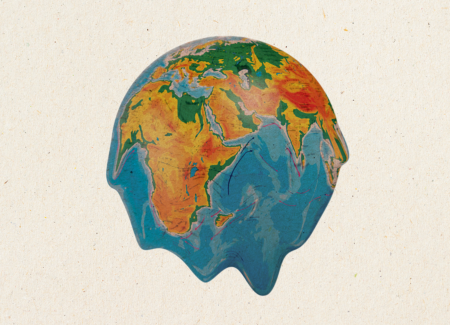
Our anthropocentric, individualistic, competitive view of life fosters a psychological detachment from the natural world, diminishing our understanding of ourselves and nature, limiting our scientific approaches, and reducing other species (and even entire planets) to mere commodities for exploitation. Yet in this endeavor, we too ultimately suffer. The more we center ourselves and seek to manipulate and control Nature, the greater the harm we endure—an insight powerfully elucidated by Rachel Carson in her 1962 book, Silent Spring, which exposed the detrimental effects of pesticides on the environment and human health. As Carson poignantly remarked, “But man is a part of nature, and his war against nature is inevitably a war against himself.”
Adapted from The Arrogant Ape by Christine Webb, published on September 2, 2025 by Avery, an imprint of Penguin Publishing Group, a division of Penguin Random House, LLC. Copyright © 2025 by Christine Webb.